 English
 Español
 Deutsch
 Português
 italiano
 Français
 عربى
عربى
Search
News categories
Recommend News
News categories
Recommend News
-
-
-
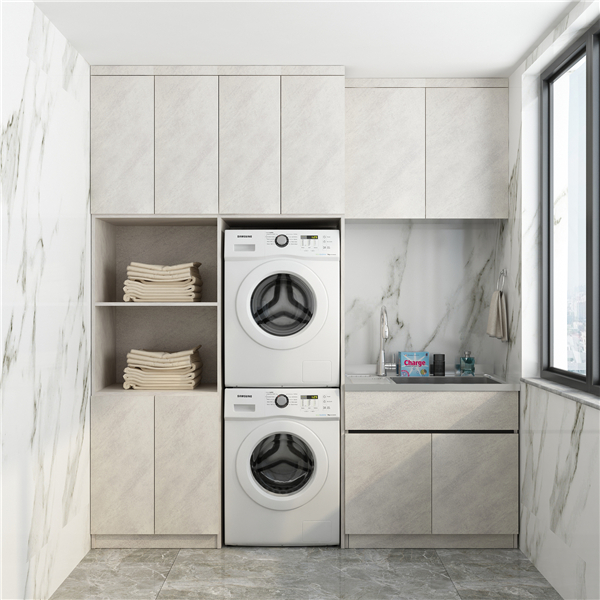 Industry News Is The Stainless Steel Laundry Cabinet Really Practical?
 -

 Sep 25, 2026 - By admin
outdoor countertops: Applications, Selection Criteria, and Practical Guidance
Sep 25, 2026 - By admin
outdoor countertops: Applications, Selection Criteria, and Practical Guidance
Content
- 1 What the Weather Really Does to a Countertop
- 2 Outdoor Countertop Materials Compared
- 3 Stainless Steel: Evidence That It Works for Decades
- 4 Design the Layout Around the Grill, Not the Slab
- 5 Structural Support: The Part Nobody Sees
- 6 Five Installation Mistakes That Cause Early Failure
- 7 The Buyer's Checklist
First frost arrived early one October, and by spring the granite edge of a new patio countertop in Minneapolis had begun to flake. The stone had never been sealed for outdoor exposure, and three winters of trapped moisture had done the rest. The problem was not the material alone — it was a design decision made for looks rather than for the freeze-thaw cycles that actually stress an outdoor surface.
Outdoor countertops resemble indoor ones, but they live in a harsher environment. Ultraviolet light, rain, grease, hot pans, and ice work on the same slab at the same time. The result is a simple rule: choose the countertop for the environment outside, not for the kitchen inside. Four materials dominate serious outdoor projects — porcelain, granite, quartzite, and stainless steel — and each one changes the way you cook, clean, and budget for upkeep.
What the Weather Really Does to a Countertop
An outdoor slab fails slowly, and the early signs are easy to miss. It first looks like a watermark, then a hairline crack, then a small chip. What you are really seeing is one of these four stresses:
- UV radiation. Coatings and resin-based surfaces fade within two or three seasons. Stone and stainless steel stay stable because their color is part of the material, not a surface film.
- Freeze-thaw cycling. Water enters micro-pores, freezes, expands, and lifts the surface. Porcelain and stainless steel absorb almost no water; granite and quartzite depend on a sealer.
- Thermal shock. A hot grill grate placed on a cold slab creates uneven stress. This is the most common cause of cracks around the cooking zone.
- Acid and stains. Marinades, tomato, wine, and citrus all attack porous surfaces. Granite needs routine sealing; porcelain and stainless steel are effectively impervious.
If you live in a cold climate, water absorption matters more than hardness. If you live in a hot, sunny one, UV stability and thermal shock matter more. The comparison in the next section is arranged around those two realities.
Outdoor Countertop Materials Compared
The table below summarizes the four surfaces that most contractors will quote for a permanent outdoor kitchen.
| Material | Heat resistance | UV stability | Stain and acid resistance | Sealing | Surface temperature in sun | Installed cost |
|---|---|---|---|---|---|---|
| Granite | Excellent | Good | Good after sealing | Yearly sealer | High | Moderate |
| Quartzite | Excellent | Excellent | Good after sealing | Yearly sealer | High | High |
| Porcelain slab | Excellent | Excellent | Excellent | None | Moderate | High |
| Stainless steel | Excellent | Excellent | Excellent | None | High but cools fast | High |
Two conclusions follow from the table. First, natural stones are more demanding than they first appear: the sealer is a recurring maintenance item, not a one-time event, and it directly controls their frost behavior. Second, porcelain and stainless steel behave similarly in the weather test, yet they feel completely different in use — porcelain offers the look of stone, while stainless steel brings the sound and texture of a professional kitchen.
Stainless Steel: Evidence That It Works for Decades
Stainless steel is rarely the first picture on a design board, but it keeps winning in service. A 304-grade stainless countertop does not fade, absorb water, or require sealing. It takes a hot pan straight from the grill, and when it picks up a scratch, the mark disappears into a uniform brushed texture instead of standing out as a defect. On a surface that will be used for decades rather than photographed for one season, that is a significant advantage.
The material is only half of the story. The fabrication has to be right — reinforced edges, smooth welds, and under-counter supports that handle real loads. This is exactly what a stainless steel manufacturer with a long production history is positioned to deliver. AFA has been forming stainless kitchen and outdoor products since 1993, and that experience translates into details you do not notice until they fail: stiffening profiles, correct wall thickness, and precise cutout tolerances.
Design the Layout Around the Grill, Not the Slab
A countertop is sold as a slab, but it performs as part of a cooking system. The most durable surface in the world will still fail if the grill cutout, sink position, and side-burner clearance are wrong.
Start with the grill. A built-in model needs a precise cutout with ventilation beneath and a load-bearing ledge around the opening. Sizing drives the design: a 36-inch grill fits a standard residential run, while a 42- or 46-inch model increases cooking area but demands a deeper countertop. Decide on the grill first, then draw the countertop around it.
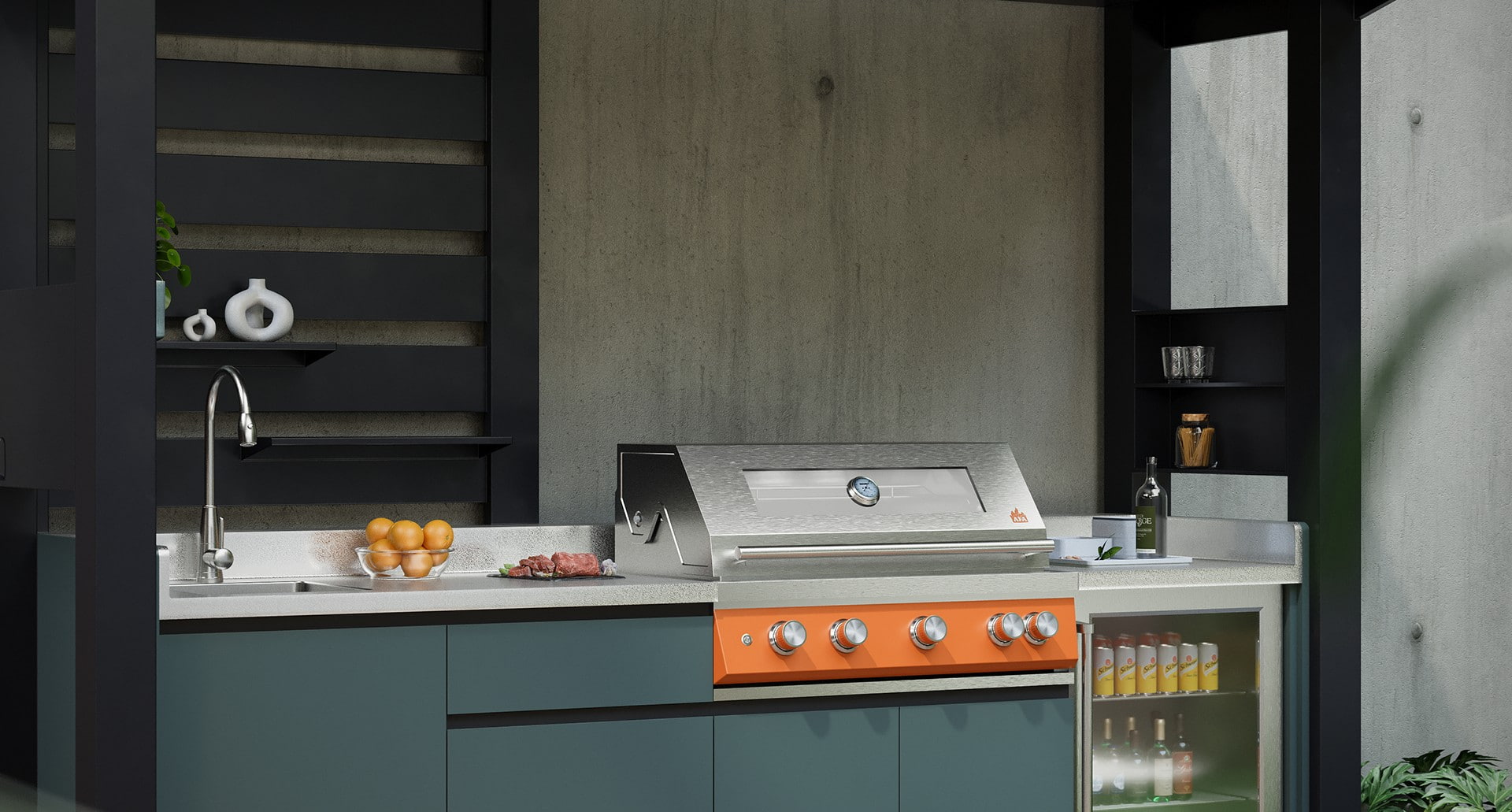 Custom 36-Inch Built-In BBQ Grill for Outdoor KitchensStart your outdoor kitchen design by selecting this 36-inch built-in grill, a standard size for residential countertops that determines cutout dimensions and depth before layout planning.View Product →
The layout is the second cost driver, and every corner adds a fabrication joint. A linear run is the most economical. An L-shaped layout creates a work triangle against a wall or railing. A U-shaped layout forms the classic outdoor kitchen ring, with cooking on one side and preparation storage on the other. More turns mean more seams, and more seams mean more maintenance — so choose the shape for the way you cook, not for symmetry.
Structural Support: The Part Nobody Sees
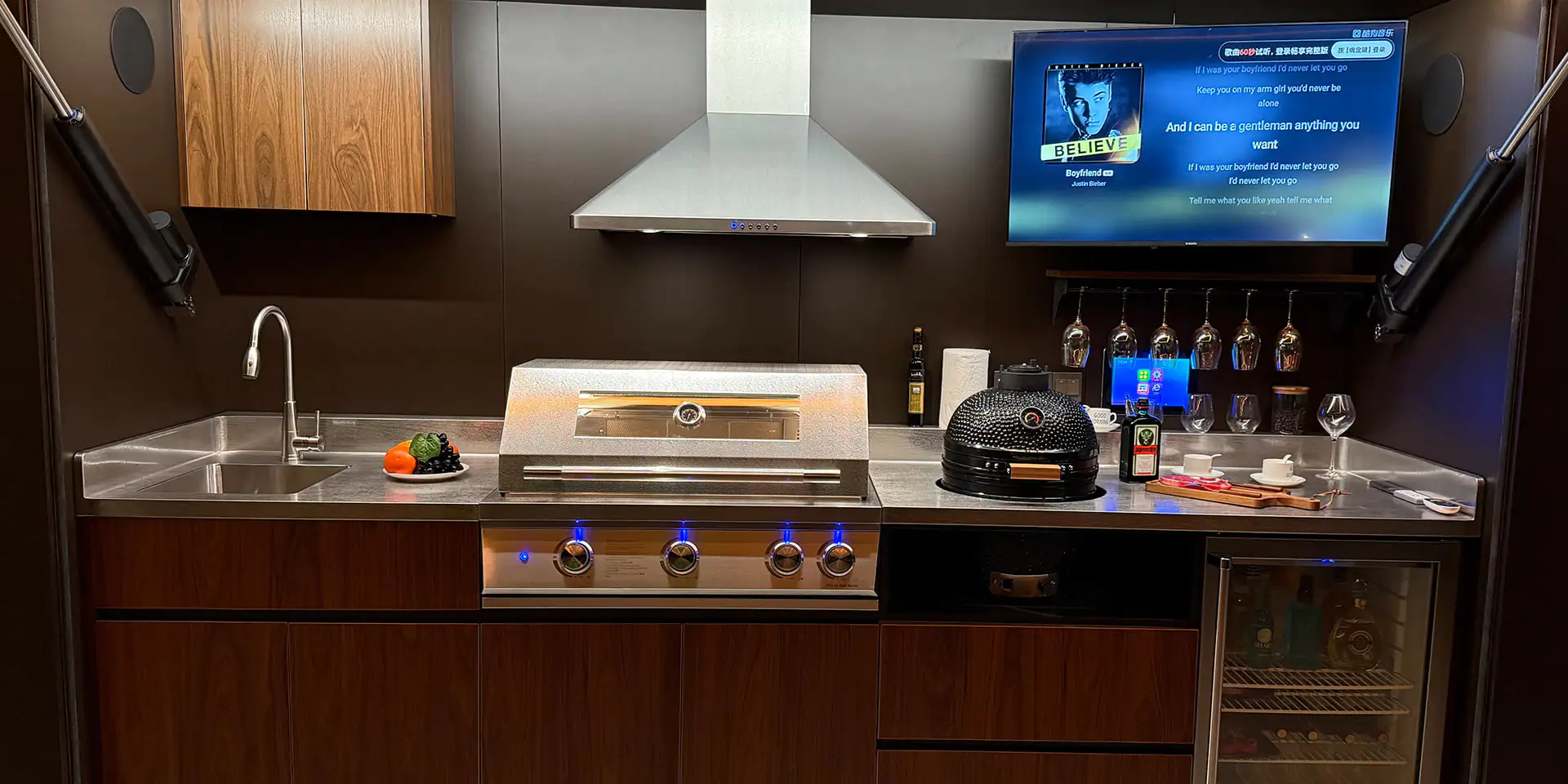
An outdoor countertop is a horizontal beam. Stone and porcelain are strong under compression but weak under tension; if the base flexes, the slab cracks. That is why the supporting structure is a requirement, not an upgrade. This is also the moment where stainless steel outdoor cabinets earn their place. A welded steel cabinet is dimensionally stable, unaffected by humidity, and will keep the countertop level for decades.
The common failure behind many cracked slabs is an open frame without support every 24 to 36 inches. Cabinets solve this because a double-door module forms a solid support unit under the main cooking counter. In a U-shaped layout, matching stainless cabinets align the base points directly under the slab joints, which lowers stress where the countertop needs it most. When the support structure and the countertop are engineered as one system, the cutouts, ledges, and cabinet heights line up correctly from day one.
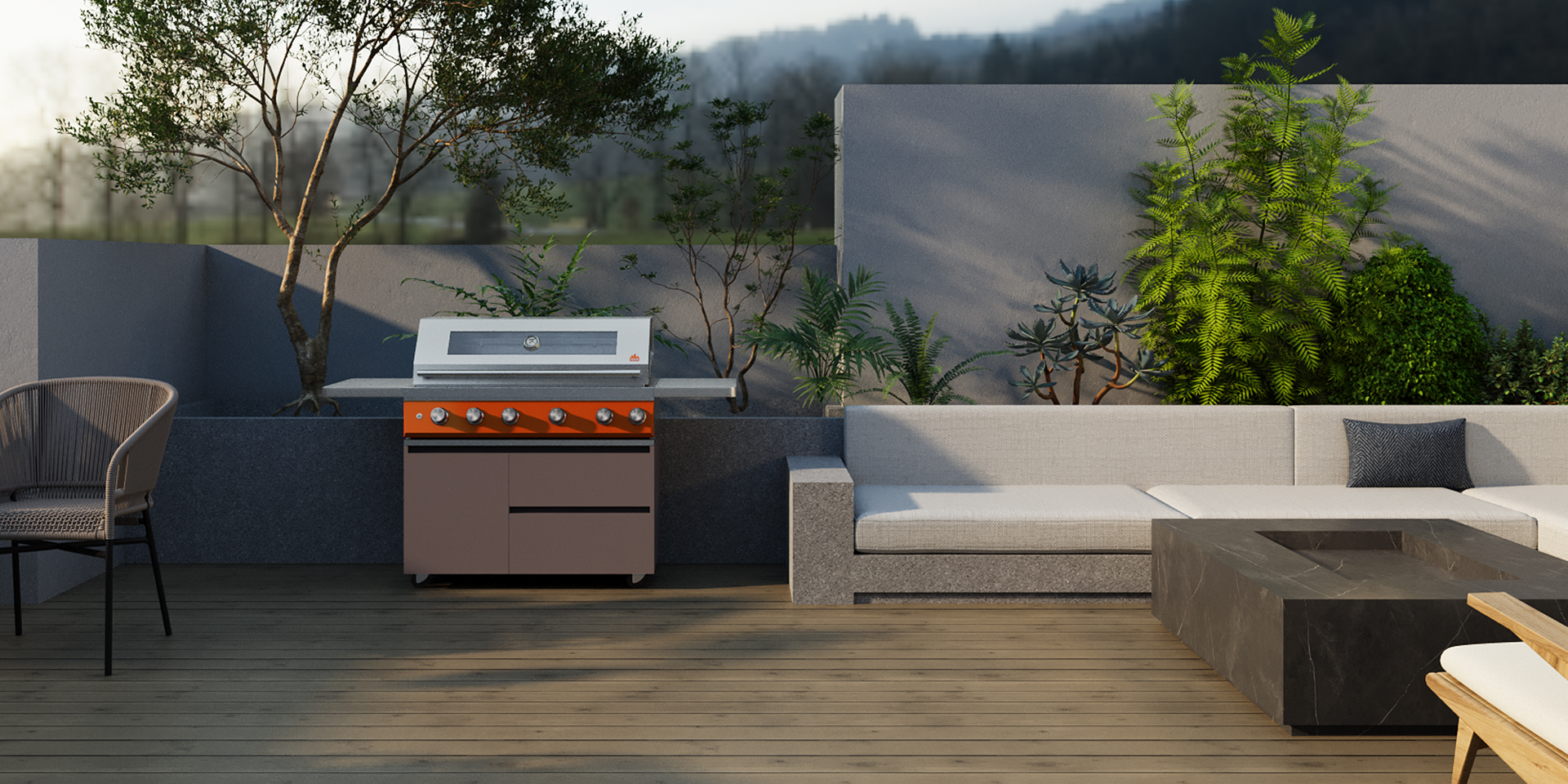 Stainless Steel BBQ Pods and Outdoor Kitchen CabinetsThese stainless steel BBQ pods and cabinets create a unified support system under countertops, aligning base points directly under slab joints to reduce stress in U-shaped layouts.View Product →
Five Installation Mistakes That Cause Early Failure
Assuming the slab arrives intact and the base is rigid, most outdoor countertop failures still come from installation details:
- Skipping the sealer on natural stone. Granite and quartzite should be sealed before the first rain and checked every season afterward.
- Building the frame from untreated wood. Wood expands, twists, and transfers movement to the slab. Use steel framing or fully vented, pressure-treated lumber.
- Making rigid joints. Large slabs expand with heat; a completely fixed joint leaves the material nowhere to go, so the edge chips.
- Forgetting to slope the surface. A flat, indoor-grade top collects water around the grill. A slight outward slope of about 1 to 2 percent keeps the cooking zone dry.
- Leaving no airflow beneath the cabinets. A closed base traps humidity, which accelerates corrosion on fasteners and fittings.
Buyers who want to remove most of these risks entirely choose a different format: a stainless BBQ pod that wraps the cooking station in walls and a wind-down door, and protects the countertop area when the kitchen is idle.
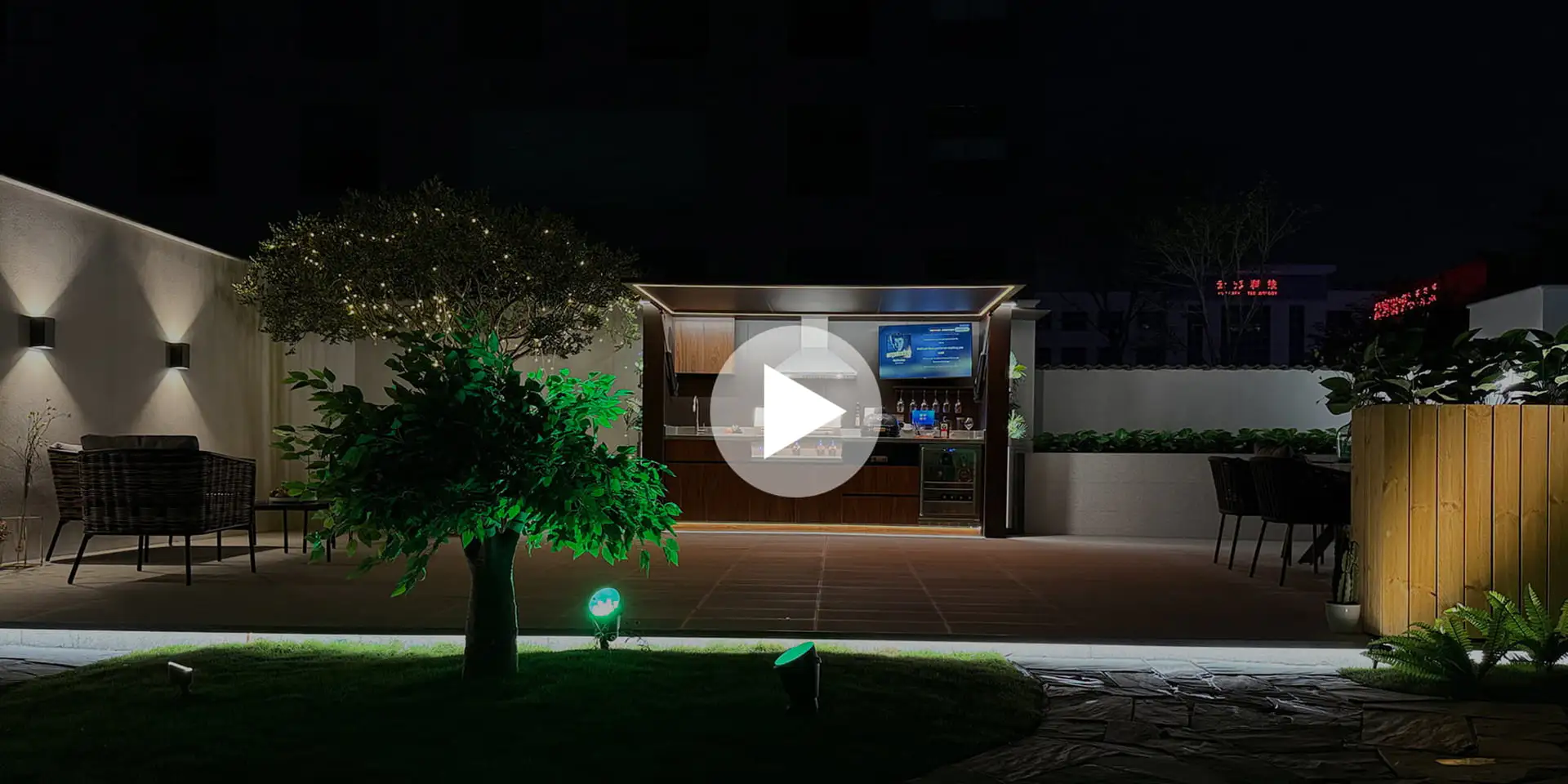 Custom Lift-Up Door BBQ Pod for Weather ProtectionA lift-up door BBQ pod wraps the cooking station in walls and a wind-down door, shielding the countertop area during idle periods and minimizing long-term maintenance risks.View Product →
The Buyer's Checklist
Before you place the order, confirm five items: the material's water absorption, the sealer schedule for natural stone, the load capacity of the base, the exact grill cutout dimensions, and the joint plan for the slab. Put those on paper, and the countertop will still look and perform well long after the novelty of the grill wears off.
If you are planning an outdoor kitchen and want the countertop, cabinets, and grill to work together as one system, open our project configurator and see how AFA can match a stainless layout to your climate and cooking habits.
Copyright © 2025 Ningbo AFA Kitchen and Bath Co.,Ltd. All Rights Reserved. Custom Modular Outdoor Kitchen Manufacturer Outdoor Barbecue (BBQ) Kitchen Factory Privacy Policy
