 English
 Español
 Deutsch
 Português
 italiano
 Français
 عربى
عربى
Search
News categories
Recommend News
News categories
Recommend News
 Sep 18, 2026 - By admin
Covered Patio Outdoor Kitchen: Layouts, Materials & Stainless Steel Guide
Sep 18, 2026 - By admin
Covered Patio Outdoor Kitchen: Layouts, Materials & Stainless Steel Guide
Content
You have planned the patio, chosen the countertop, and picked out the grill. But if the kitchen itself has no roof, you are one thunderstorm away from a rusted burner and a cancelled dinner party. A covered patio outdoor kitchen is not a luxury anymore — it is the difference between a cooking area you use three months a year and one that works in light rain, autumn evenings, and hot midday sun.
Why Cover Your Patio Outdoor Kitchen?
A cover changes how often you cook outside and how long the equipment lasts. The most obvious reason is protection: rain, UV rays, falling leaves, and pollen all attack stainless steel, wood, and electronics. But a cover also creates a more usable space. You can leave pans on the counter, store spices in the open, and keep a bar tray set without cleaning it every night.
There are also structural benefits. An overhead structure reduces direct sun exposure on the grill, which helps maintain more stable cooking temperatures. It shields the cook from wind-blown rain, and it keeps the floor drier, reducing slip risks. For electronics like refrigerator compressors and grill igniters, the shade lowers peak temperatures and extends service life.
A cover also increases the resale value of your home. Real estate listings often highlight covered outdoor rooms as an extension of the living space. The mental comfort matters too: you do not have to watch the sky while you are searing steaks, and you can leave plates and tools out until the next morning.
Plan the Layout Around Your Cooking Flow
Before you buy anything, decide whether your covered patio outdoor kitchen will be a single counter with a built-in grill or a full U-shaped workstation. The layout defines which components fit and how many people can gather without crowding.
Linear and L-shaped runs work best along a single wall or a corner. U-shaped and G-shaped layouts give you a separate prep zone, a cooking zone, and a serving zone, which is helpful if you regularly cook for more than six guests. A G-shaped layout adds a short leg that can double as a breakfast bar.
Minimum dimensions that feel comfortable
- Working countertop depth: 24–26 inches (61–66 cm)
- Walkway in front of the counter: at least 36 inches (91 cm)
- Height of the cooking surface: 34–36 inches (86–91 cm) to match standard indoor counters
| Layout | Best for | Typical counter length |
|---|---|---|
| Linear | Small patios, one cook | 6–10 ft |
| L-shaped | Corner spaces, with room for a table | 8–12 ft per side |
| U-shaped | Multiple cooks, full prep flow | 9–12 ft, plus 3–4 ft base |
| G-shaped | Added seating or bar area | Varies; add a 3–4 ft peninsula |
If you are short on space, consider building around a mobile cart instead. A barbecue cart gives you the same cooking function with a smaller footprint and can be moved away during storms.
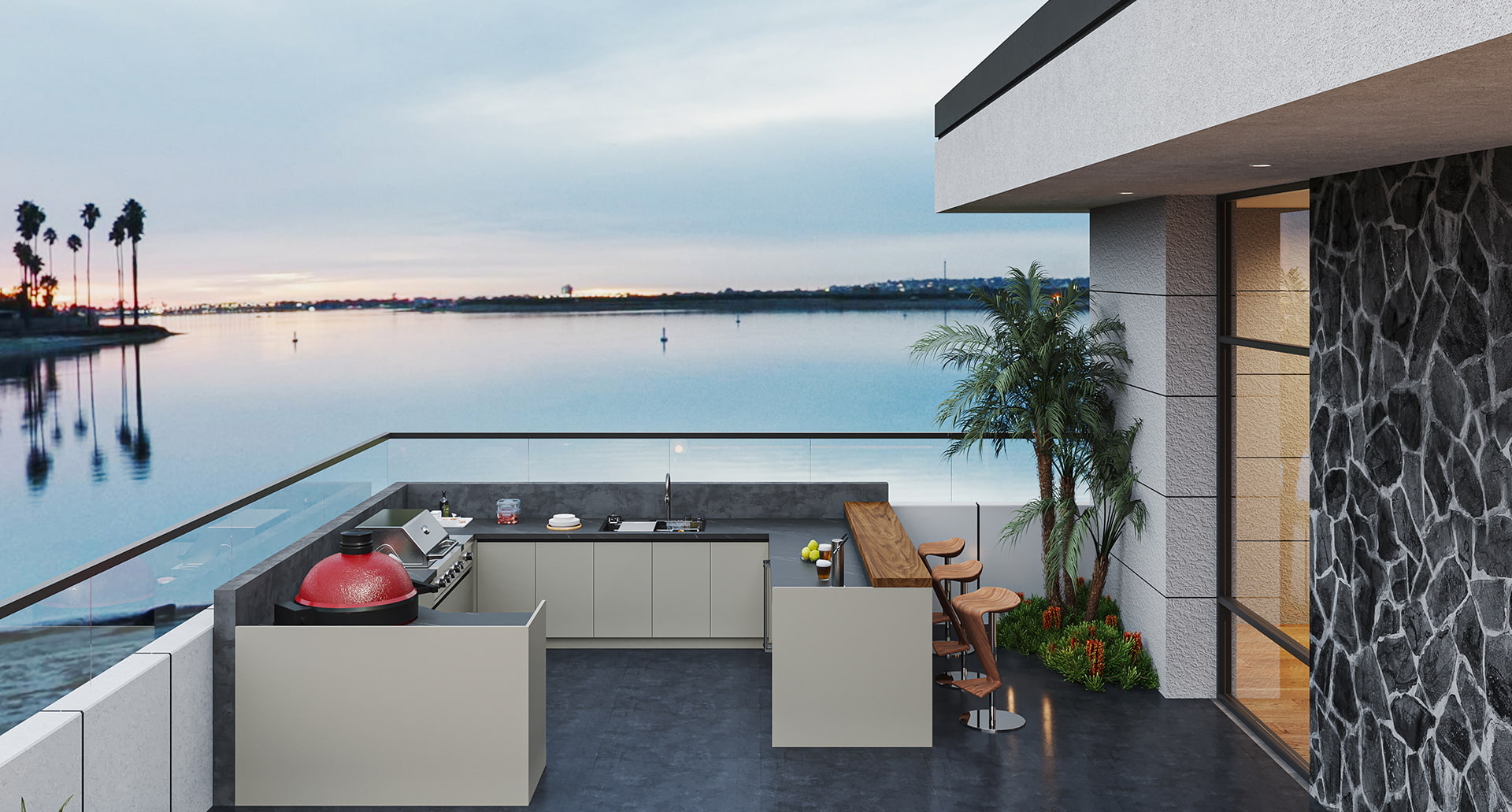 Custom U-Shaped Outdoor Kitchen Cabinet Set with Sealed StorageA modular U-shaped stainless steel cabinet system that can seat three comfortably while concealing propane tanks, trash bins, and tools behind sealed doors—ideal for permanent outdoor storage and prep surfaces.View Product →
When you need permanent storage and prep surfaces, a modular cabinet system is the fastest route. A U-shaped stainless steel cabinet set from AFA, for example, fits three people comfortably and conceals propane tanks, trash bins, and tools inside sealed doors.
Choose Equipment That Works Under a Roof
Not every grill and refrigerator behaves the same inside a covered area. Ventilation, clearance, and heat resistance matter. If your cover is a low pergola with an open roof, you can use any standard grill. For a fully enclosed gazebo or a structure with a ceiling, you need a grill rated for built-in installation and proper venting above the hood.
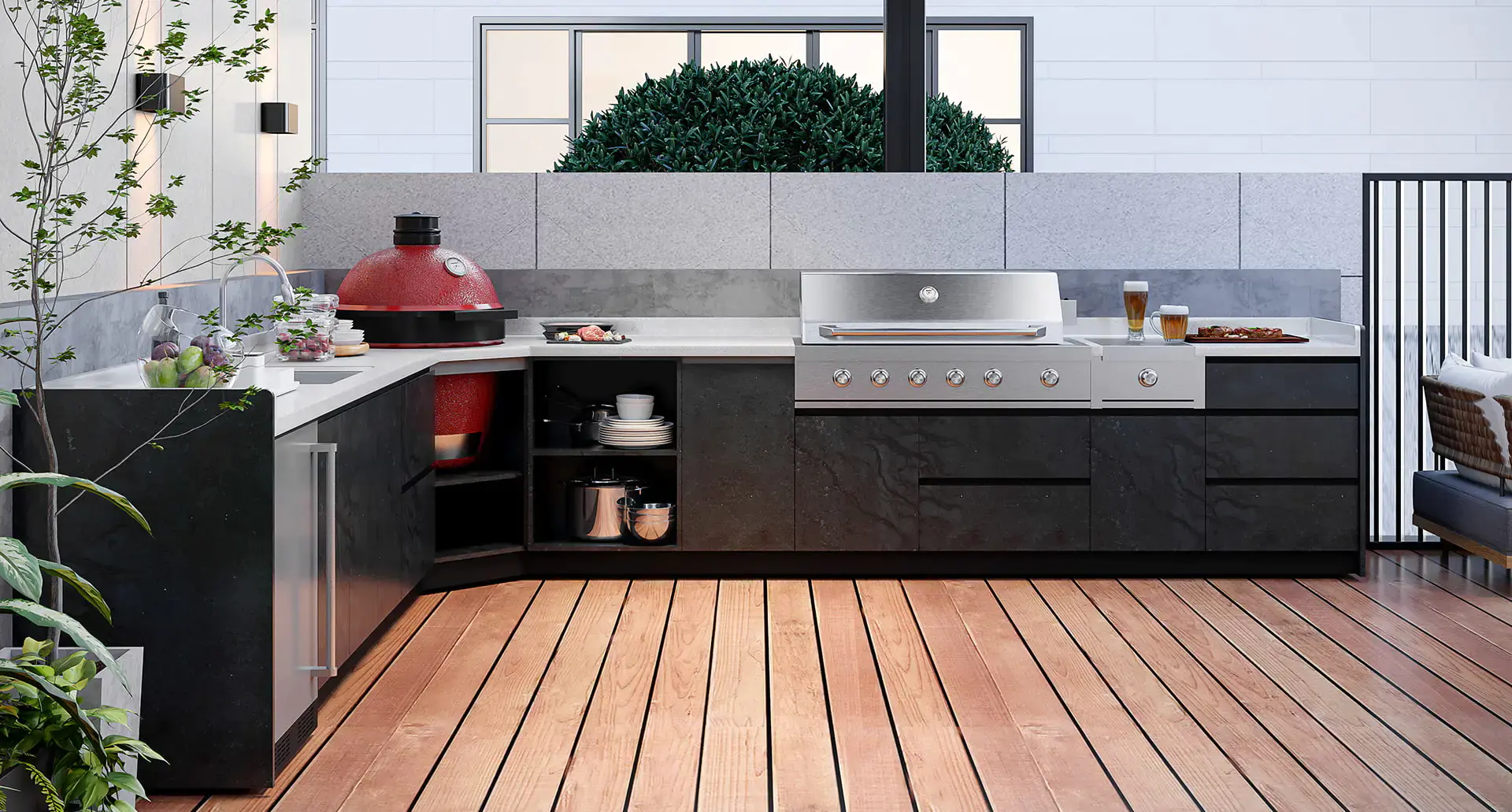
A built-in grill is the centerpiece of most covered outdoor kitchens. Stainless steel units in 30, 36, 42, or 46 inches give you different cooking areas; the larger sizes are worth it when you regularly cook for more than eight people. Look for 304 stainless steel burner boxes and a drip tray that pulls out for cleaning.
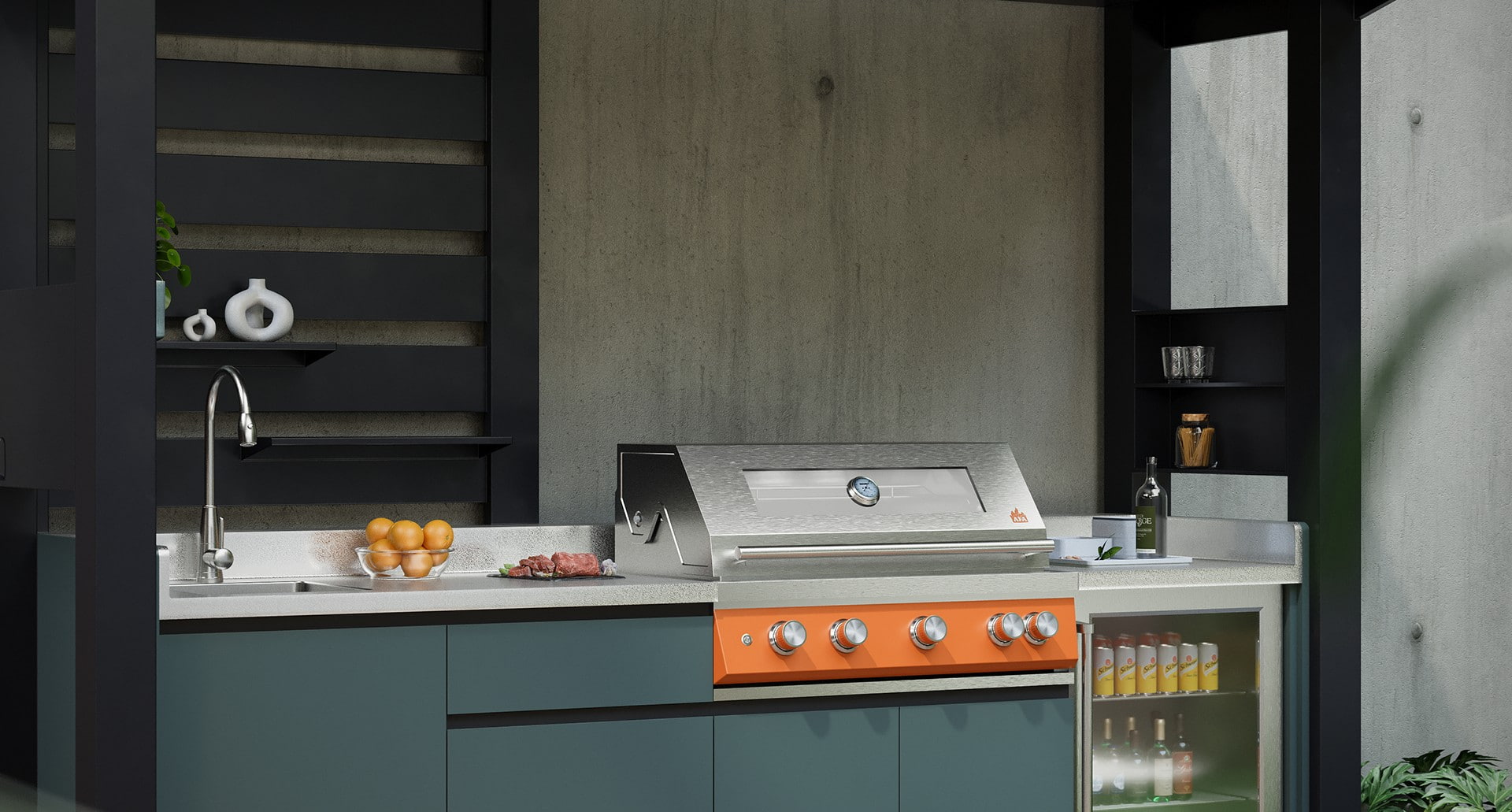 Custom 36-Inch Built-In BBQ Grill for Outdoor KitchensA 36-inch built-in grill often serves as the centerpiece of a covered outdoor kitchen, offering ample cooking area for larger gatherings. Look for robust stainless steel construction and removable drip trays for easy cleaning.View Product →
Key specifications to compare
- BTU output and heating zone separation
- Type of stainless steel (304 vs 430)
- Grill grate material: cast iron, stainless, or ceramic
- Venting requirements for the enclosed space
- Ignition system and warranty on electronic parts
A refrigerator and a sink are the next priorities. The fridge should be rated for outdoor use, with a sealed compressor and rust-proof hinges. The sink needs a drain line that can freeze; in cold climates, plan a shutoff valve and an air gap.
Finally, think about storage. A covered patio kitchen still gets dust and moisture, so closed cabinets are always better than open shelves for dishes and tools. Utility cabinets with adjustable shelves keep the grill tools organized and off the counter.
Why Stainless Steel Is the Right Material for a Covered Patio Kitchen
You can build a covered patio outdoor kitchen out of stone, brick, or concrete, but the working surfaces and cabinets need to survive decades of weather shifts. Stainless steel does that better than most materials. It does not rot, absorb water, or warp like wood. It is easy to wipe down, and it resists the corrosive mix of humidity, cooking grease, and chlorides from nearby pools.
Not all stainless steel is the same. For outdoor use, specify 304 stainless steel for panels and frames. It contains 18% chromium and 8–10% nickel, which gives a stable oxide layer. Avoid 430 stainless steel, which has less chromium and will rust in marine or poolside environments. Grade 316 adds molybdenum for extra chloride resistance, but it costs more and is rarely necessary for residential patios.
Thickness also matters. Cabinet frames made from 1.0–1.2 mm stainless steel feel solid; thinner metal can vibrate and deform. A brushed finish hides fingerprints better than a mirror polish. Production quality is another factor: precise welding, rounded inner corners, and sealed joints prevent moisture from getting into hidden areas. AFA's manufacturing experience, from the early R15 one-piece sink development to its current stainless steel production lines, shows in how consistently the panels line up.
If you are evaluating a supplier, ask about their raw material sourcing and welding process. A factory tour is the best way to judge. AFA's manufacturing facility is a good example of what to look for: dedicated stainless steel fabrication lines, welding stations, and finishing areas that keep the material clean and scratch-free.
Covered Style Options: Pergola, Pavilion, or a Full BBQ Pod
The style of your cover affects both the look and the functionality. A pergola with open slats provides partial shade and good airflow. It is the least protective option, but it works for patios with morning sun and no heavy rain exposure. A solid roof, whether attached to the house or freestanding, gives the highest degree of protection and lets you add a ceiling fan, lighting, and a sound system.
A retractable awning or canopy is a flexible middle ground: close it during rain, open it for sun. But retractable systems still collect water and require maintenance. For year-round outdoor kitchens, a permanent structure is simpler.
For homeowners who want a complete cooking enclosure without a permanent construction project, a BBQ pod is a ready-made solution. It is a stainless steel unit with a lift-up door, roller shutter, or roller blind that covers the entire cooking area. You can install it on an existing patio slab, connect gas and power, and have a protected kitchen that closes completely when not in use. The lift-up door style gives an open-air feel while protecting the equipment.
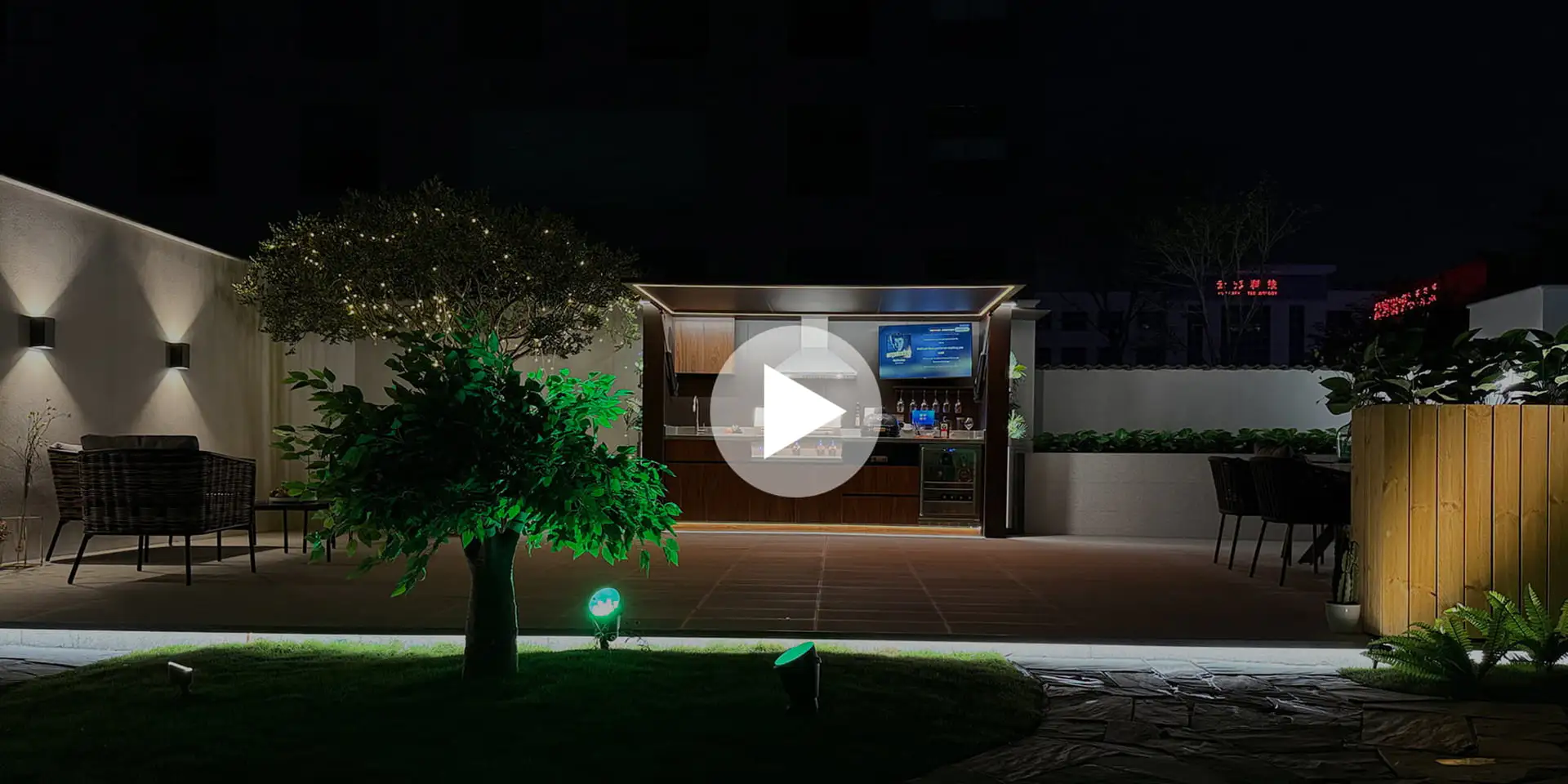 Custom Lift-Up Door BBQ Pod for Covered Patio UseThis lift-up door BBQ pod provides a complete stainless steel cooking enclosure that can be installed on an existing patio slab, closing fully when not in use—a ready-made solution for those who want a protected kitchen without permanent construction.View Product →
Pavilion-style pods go further with an integrated roof structure, turning the kitchen into a small outdoor room. If you already have a covered patio, a freestanding pod can be tucked under the same roof to add storage and grill capacity.
A covered patio outdoor kitchen is a long-term investment. Plan the layout around your cooking habits, choose 304 stainless steel for the surfaces, and select a cover style that matches your climate. Get those decisions right, and you will have a space that works for years.
If you're interested in our products, please contact us. For a quick start, use our online configurator to build your kitchen module.
Copyright © 2025 Ningbo AFA Kitchen and Bath Co.,Ltd. All Rights Reserved. Custom Modular Outdoor Kitchen Manufacturer Outdoor Barbecue (BBQ) Kitchen Factory Privacy Policy
