 English
 Español
 Deutsch
 Português
 italiano
 Français
 عربى
عربى
Search
News categories
Recommend News
News categories
Recommend News
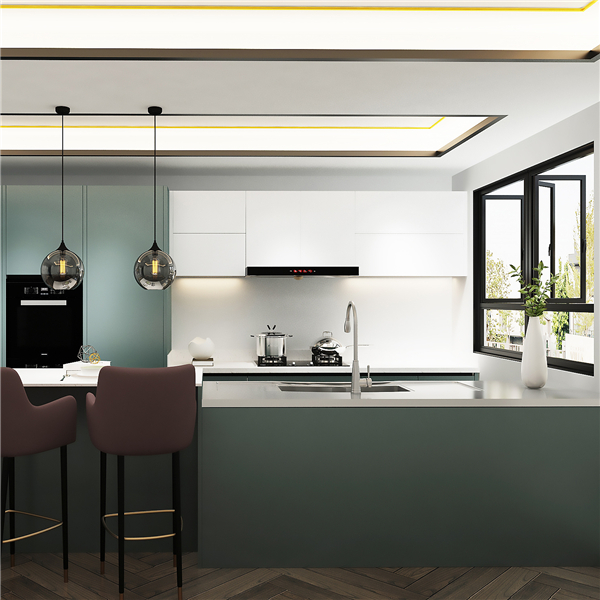
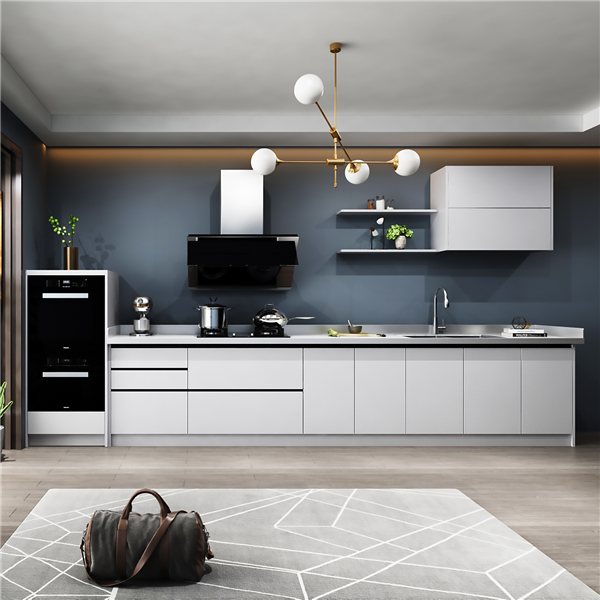
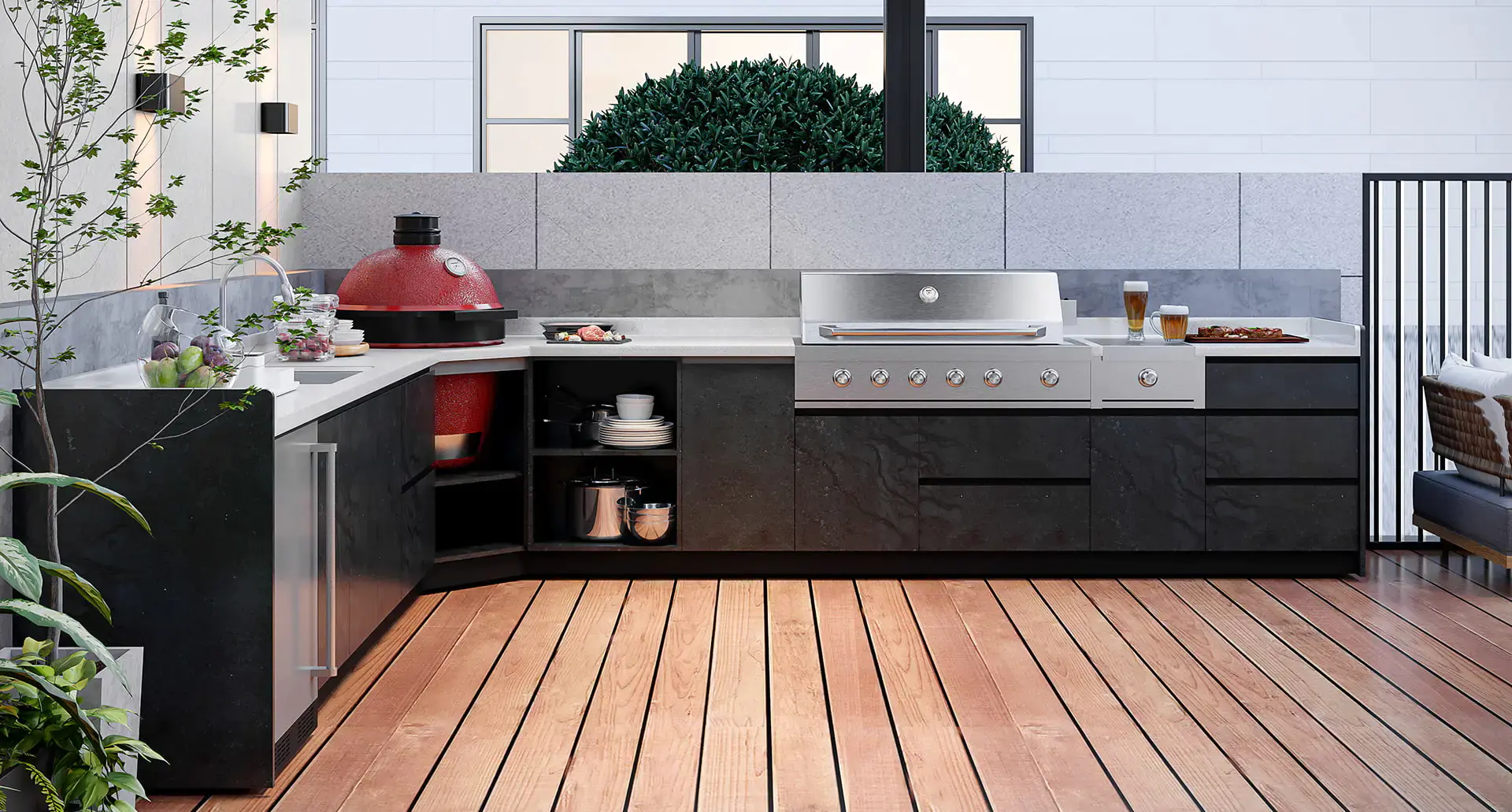 Oct 09, 2026 - By admin
Stainless Steel Kitchen Cabinets: Grades, Thickness, Layout and Cost Guide
Oct 09, 2026 - By admin
Stainless Steel Kitchen Cabinets: Grades, Thickness, Layout and Cost Guide
Content
- 1 What Stainless Steel Kitchen Cabinets Do Well — and Where They Struggle
- 2 Grade and Thickness: Two Numbers to Verify First
- 3 Door and Carcass Construction: The Details Buyers Miss
- 4 Layout and Dimensions That Prevent Callbacks
- 5 Cost Drivers and Procurement Risks
- 6 Cleaning, Corrosion and Long-Term Upkeep
- 7 Stainless Cabinets for Outdoor and Covered Kitchens
- 8 Storage, Laundry and Utility Cabinets
A distributor once shipped three cabinet doors back to the factory because the film on the door faces bubbled after two summers. Nothing was wrong with the design. The doors were film-faced panels being sold as stainless, and that single detail explains a large share of complaints about stainless steel kitchen cabinets.
The short version first: stainless cabinets live up to their reputation only when four things are settled before the first sheet is cut — alloy grade, panel thickness, door construction and layout tolerance. Get them right and the cabinets will outlast two or three timber or laminate kitchens in the same humid, greasy, high-traffic room. Get them wrong and the same product looks tired within two years.
What Stainless Steel Kitchen Cabinets Do Well — and Where They Struggle
Stainless is not a style decision first; it is a material response to wet, hot and hygiene-sensitive kitchens. The advantages that hold up in daily use:
- No swelling or delamination in steam, splash and leak zones.
- Non-porous, easy to sanitize surfaces, with no formaldehyde-based adhesives in the panel.
- Heat and grease resistance around cooktops, fryers and ovens.
- Typical service life of 15 to 20 years, with individual doors replaceable rather than the whole run.
- High scrap value at end of life, which matters for commercial fit-outs.
The limits are just as real. A 0.6 mm door skin dents when a pan hits it. Bright panels show fingerprints and glare unless an anti-fingerprint finish is applied. Metal drawers transmit sound, so dampening pads are not optional in open-plan homes. And the upfront price is higher than melamine-faced board; the return arrives through maintenance and replacement costs, not at the checkout.
Grade and Thickness: Two Numbers to Verify First
Grade comes first. 304 stainless, at roughly 18% chromium and 8% nickel, is the normal baseline for cabinets and sinks. 201 replaces part of the nickel with manganese; it costs less and forms well, but it stains earlier in coastal air or where chlorine-based cleaners are used. 430 is ferritic, magnetic and essentially nickel-free, which makes it a trim material rather than a wet-area panel.
| Grade | Composition focus | Corrosion performance | Typical cabinet use |
|---|---|---|---|
| 304 | 8–10.5% nickel, 18–20% chromium | Handles humidity, food acids and most cleaners | Cabinets, sinks, worktops |
| 201 | 1–4% nickel, higher manganese | Acceptable indoors, stains sooner with salt or chlorine | Budget cabinet panels |
| 430 | No nickel, ferritic and magnetic | Limited; not for wet or coastal areas | Trims, splashbacks, decorative parts |
Thickness is the second check. Door skins commonly run 0.8 to 1.0 mm, carcass panels 0.9 to 1.2 mm, and countertops 1.2 to 1.5 mm. Because the stated figure is nominal, with tolerances near ±0.05 mm, verify it with a micrometer at three points per panel instead of trusting the label. Ask for mill certificates for the coil; a supplier who resists a thickness check has already answered the question.
Door and Carcass Construction: The Details Buyers Miss
Door construction decides service life
Three door types dominate the market: PVC blister film over a board core, a welded stainless frame around an infill panel, and a fully welded solid panel. Blister doors are the cheapest and the most likely to peel under heat or UV. Framed doors balance cost and durability for indoor kitchens. Solid welded panels are what heavy-use and outdoor kitchens need.
Hardware, sealing and drainage
Specify 304 hinges and drawer slides, stainless leveling feet, and neutral-cure silicone at every joint — never acid-cure. Leave a service gap behind plumbed units and ventilation space behind built-in appliances, and give sink-adjacent cabinets a slight fall with a sealed bottom panel so spills reach the drain instead of the carcass.
AFA has manufactured stainless kitchen products since 1993 and now operates three production sites covering 45,000 square metres; the company documents its quality control process separately from raw material sourcing, which is a sensible checklist structure for evaluating any cabinet supplier.
Layout and Dimensions That Prevent Callbacks
Most complaints about stainless kitchens are installation complaints rather than material complaints. Fix these numbers before fabrication begins:
- Linear: a single wall run, best for galley kitchens.
- L-shaped: two adjacent walls, keeping the work triangle compact.
- U-shaped: three walls, maximum storage, needs 1000–1200 mm between facing runs.
- G-shaped or peninsula: adds a short return, so check aisle width before committing.
- Diamond and angled runs: for irregular walls and corner sinks.
Typical figures: carcass height 850–900 mm, countertop depth 600–650 mm, aisle 1000–1200 mm, filler panels of 20–50 mm at each wall to absorb out-of-square rooms, and door gaps of 2–3 mm so panels never rub when temperature and humidity shift.
The same logic applies outdoors, where an L-shaped run with welded frames and adjustable feet copes with uneven slabs better than one long straight line.
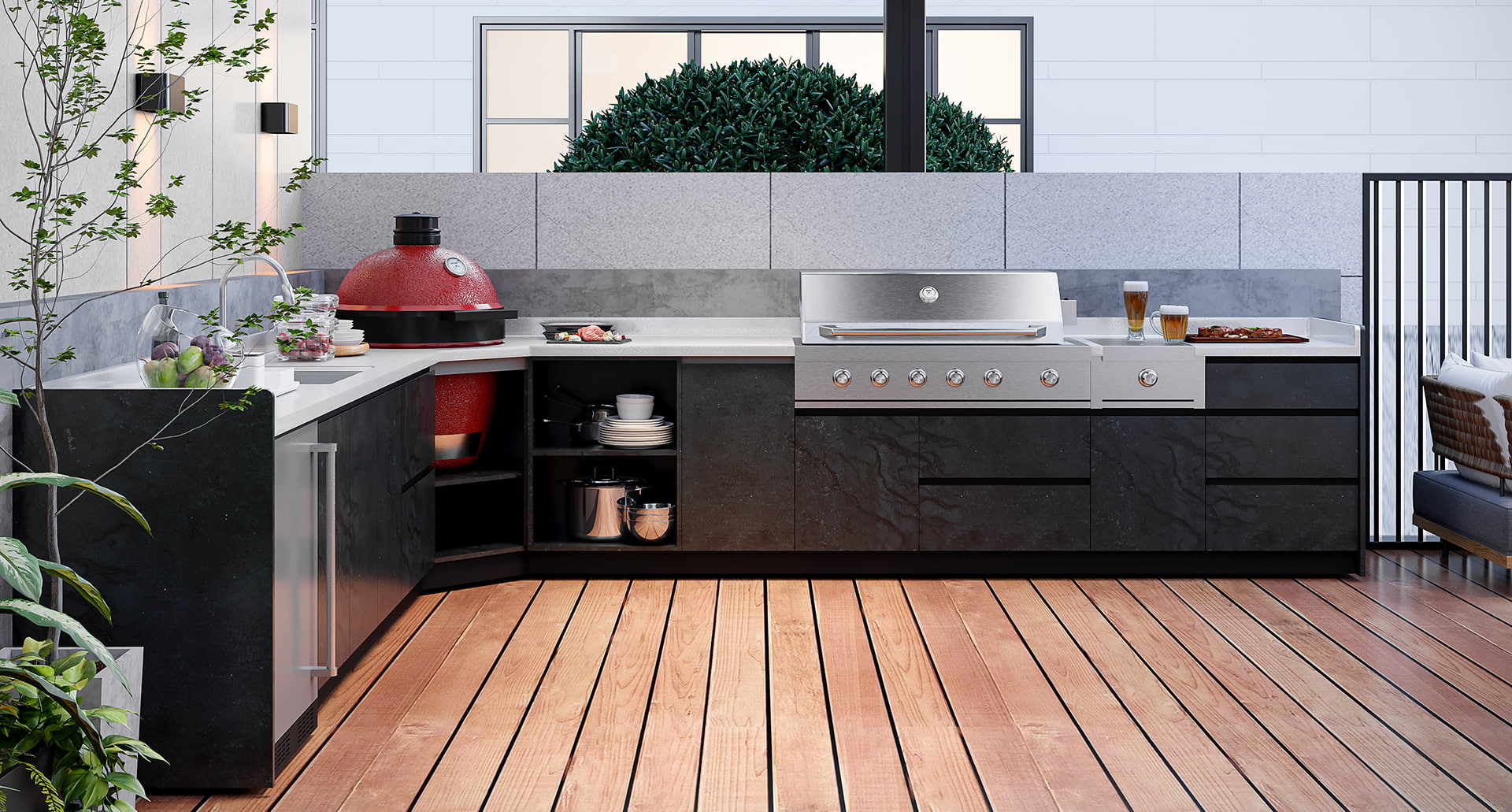 L-Shaped Outdoor Kitchen Cabinet for Gazebos and Semi-Open SpacesFor gazebos or semi-open spaces, this L-shaped outdoor cabinet organizes grilling tasks with storage, washing, cutting and two-sided function display.View Product →
Cost Drivers and Procurement Risks
Two quotes for the same kitchen usually differ for five reasons:
- Grade and measured thickness of the coil.
- Door construction — blister, framed or solid welded.
- Hardware class and drawer count.
- Volume and freight density, since nested cabinets ship more efficiently than assembled boxes.
- Documentation, spare parts and packaging specification.
The recurring risks are mixed-grade sheet, a thickness that "runs a little light", missing spare hinges and touch-up materials, and packaging that survives the factory but not the container. Write grade, measured thickness, hardware class and spare-part quantities into the purchase order, and approve a first article before volume production starts.
Cleaning, Corrosion and Long-Term Upkeep
Stainless stains for reasons that rarely involve the steel itself. Chlorides from bleach, salt or pool water break down the passive layer; iron particles from nearby grinding embed in the surface and rust; food acids left overnight leave permanent marks.
- Clean with warm water and mild detergent, then dry — standing water leaves mineral spots.
- Never use steel wool, chloride bleach or abrasive powders.
- Wipe along the brushed grain, not across it.
- Re-passivate after heavy scratching or welding repairs.
- Keep joints sealed and ventilation gaps open so moisture escapes rather than collects.
Stainless Cabinets for Outdoor and Covered Kitchens
Outdoors the rules shift. Salt air, rain and UV push the material harder, so 316 or 316L is the safer choice within a few kilometres of the coast, and drainage, ventilation and a roofed or sliding enclosure matter more than the grade alone. Cabinet runs that stay dry last for decades; runs sitting in pooled water do not, whatever the alloy.
AFA builds stainless kitchen cabinetry for indoor and outdoor use, including covered outdoor kitchen cabinets supplied in welded, weather-facing construction.
 Stainless Steel Outdoor Kitchen Cabinets in Five ShapesBrowse five 304 stainless steel outdoor cabinet shapes—LINEAR, L-SHAPED, DIAMOND-SHAPED, U-SHAPED and G-SHAPED—with waterproof construction, custom configurations and countertop choices.View Product →
Storage, Laundry and Utility Cabinets
Once the fabrication platform exists, the same panels and welding jigs serve the rest of the house: laundry cabinets that tolerate wet towels, bathroom vanities that ignore steam, and garden-side storage for tools, hoses and grill accessories. Matching finish and door hardware across these units keeps a renovation visually consistent and simplifies spare-part management.
For bulky utility storage, a large three-door outdoor cabinet holds items a standard base cabinet cannot.
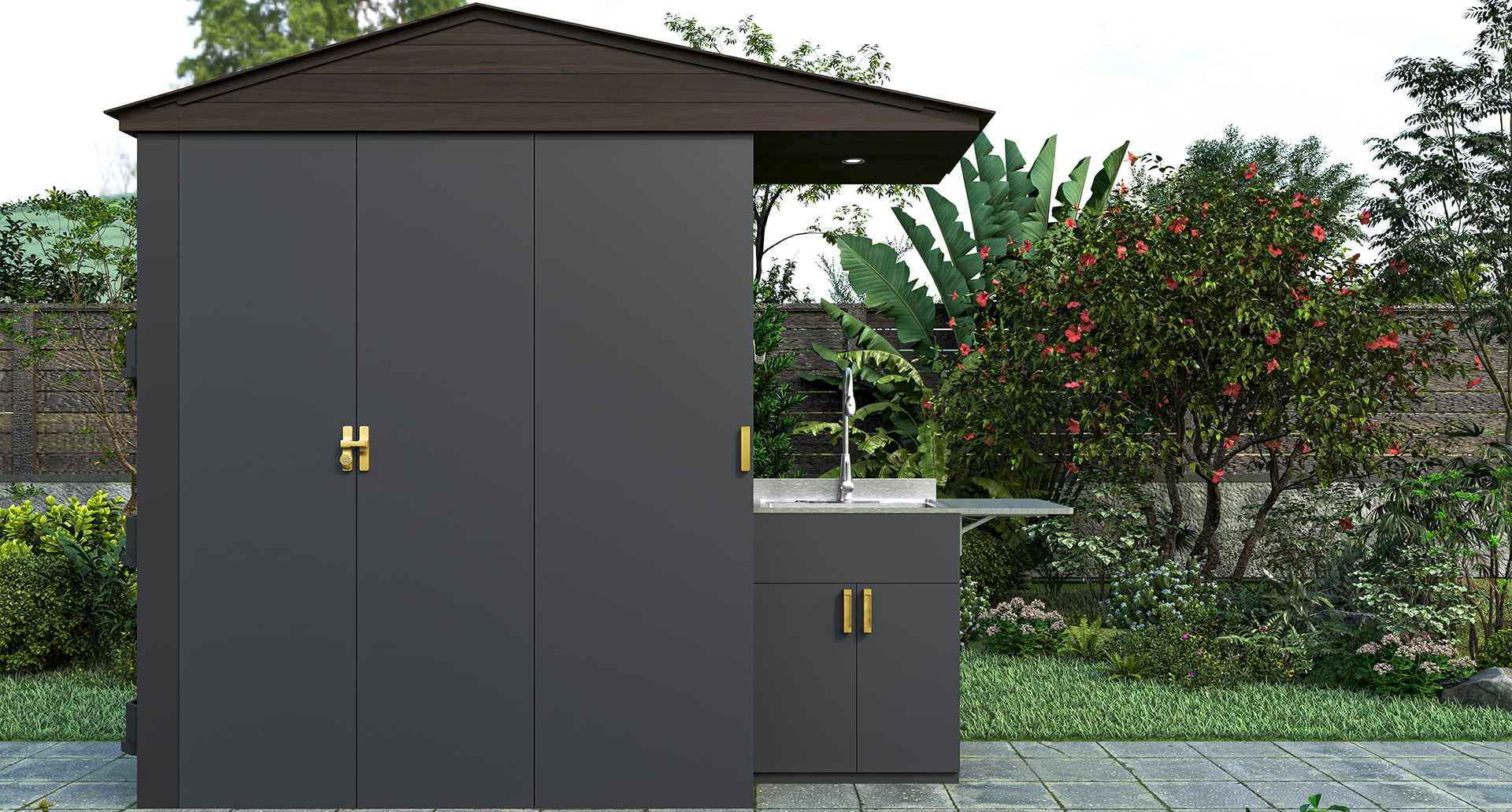 G-TC3 Large Three-Door Outdoor Multi-Function Tool CabinetFor bulky utility storage on large patios or estates, this three-door cabinet holds garden tools and lawnmowers with two-sided function display.View Product →
If you are specifying stainless steel kitchen cabinets for a residential project, a distributor programme or your own home, tell us the grade, thickness, layout and finish you need and we will quote against those exact numbers. If our products interest you, please contact us, or assemble your preferred door type, size and model step by step in our optional series configurator and send the result over for pricing, drawings and samples.
Copyright © 2025 Ningbo AFA Kitchen and Bath Co.,Ltd. All Rights Reserved. Custom Modular Outdoor Kitchen Manufacturer Outdoor Barbecue (BBQ) Kitchen Factory Privacy Policy
