 English
 Español
 Deutsch
 Português
 italiano
 Français
 عربى
عربى
Search
News categories
Recommend News
News categories
Recommend News
 Jul 31, 2026 - By admin
Outdoor Kitchen Cabinets Ideas: A Practical Design Guide
Jul 31, 2026 - By admin
Outdoor Kitchen Cabinets Ideas: A Practical Design Guide
Content
- 1 Stainless Steel Outdoor Kitchen Cabinets Are the Most Practical Starting Point for Nearly Every Outdoor Kitchen Cabinets Ideas Project
- 2 Why Material Choice Comes Before Style When Planning Outdoor Kitchen Cabinets
- 3 Comparing Common Outdoor Kitchen Cabinet Materials
- 4 Layout Ideas That Improve Everyday Usability
- 5 Storage Ideas Worth Considering
- 6 Design Details That Elevate the Finished Look
- 7 Alternative Uses for Outdoor Kitchen Cabinets Beyond Cooking
- 8 Bringing These Outdoor Kitchen Cabinets Ideas Together
Stainless Steel Outdoor Kitchen Cabinets Are the Most Practical Starting Point for Nearly Every Outdoor Kitchen Cabinets Ideas Project
If you are searching for outdoor kitchen cabinets ideas, the most reliable starting point is choosing a corrosion-resistant material and a layout that matches how you actually cook and entertain outdoors. Outdoor kitchen cabinets built from grade 304 stainless steel consistently outperform wood, particleboard, and painted metal alternatives in humidity, salt air, and temperature swings, which is why they form the backbone of most durable outdoor kitchen designs. Beyond material selection, layout, storage configuration, and weatherproofing details determine whether an outdoor kitchen remains functional and attractive for years or requires early repairs. The sections below walk through the practical decisions that shape a successful outdoor kitchen cabinet project, from material comparisons to layout planning and finishing details.
Why Material Choice Comes Before Style When Planning Outdoor Kitchen Cabinets
Before browsing colors and configurations, it helps to understand how different cabinet materials actually hold up outdoors. An outdoor kitchen is exposed to rain, UV radiation, temperature swings, and in many regions, salt air, all of which accelerate material breakdown far faster than an indoor kitchen ever experiences.
Stainless Steel
Grade 304 stainless steel resists rust, does not absorb moisture, and holds up under direct sun exposure without fading or warping, making it the benchmark material for coastal and high-humidity installations. Cabinet-grade sheet typically runs between 0.91 and 1.5 millimeters in thickness, which provides enough rigidity to prevent denting while keeping the overall cabinet weight manageable for installation.
Wood and Composite Alternatives
Wood cabinetry, even when treated or sealed, requires periodic refinishing to resist swelling, cracking, and rot from repeated moisture exposure. Composite panels can offer a middle ground on cost but generally cannot match the long-term structural stability of welded stainless steel in an uncovered outdoor setting.
Painted or Powder-Coated Metal
Painted steel cabinets can look appealing initially, but chips or scratches in the coating expose bare metal to moisture, which often leads to rust spreading beneath the finish before it becomes visible on the surface.
Comparing Common Outdoor Kitchen Cabinet Materials
The table below summarizes how the main cabinet material categories compare on the factors that matter most for long-term outdoor performance.
For anyone comparing outdoor kitchen cabinets ideas across price points, this table illustrates why stainless steel is so frequently recommended despite a higher upfront cost: the lower long-term maintenance burden often offsets the initial price difference over several years of outdoor exposure.
Layout Ideas That Improve Everyday Usability
A well-planned layout is often the difference between an outdoor kitchen that gets used daily and one that becomes an occasional novelty. The most functional layouts organize cabinets and appliances around a clear cooking, prep, and storage workflow.
The Straight-Line Layout
A single run of cabinets along one wall works well for smaller patios and typically includes a grill cabinet, a countertop section, and a storage or bar cabinet on either side. This layout is straightforward to install against an existing wall or fence line.
The L-Shaped Configuration
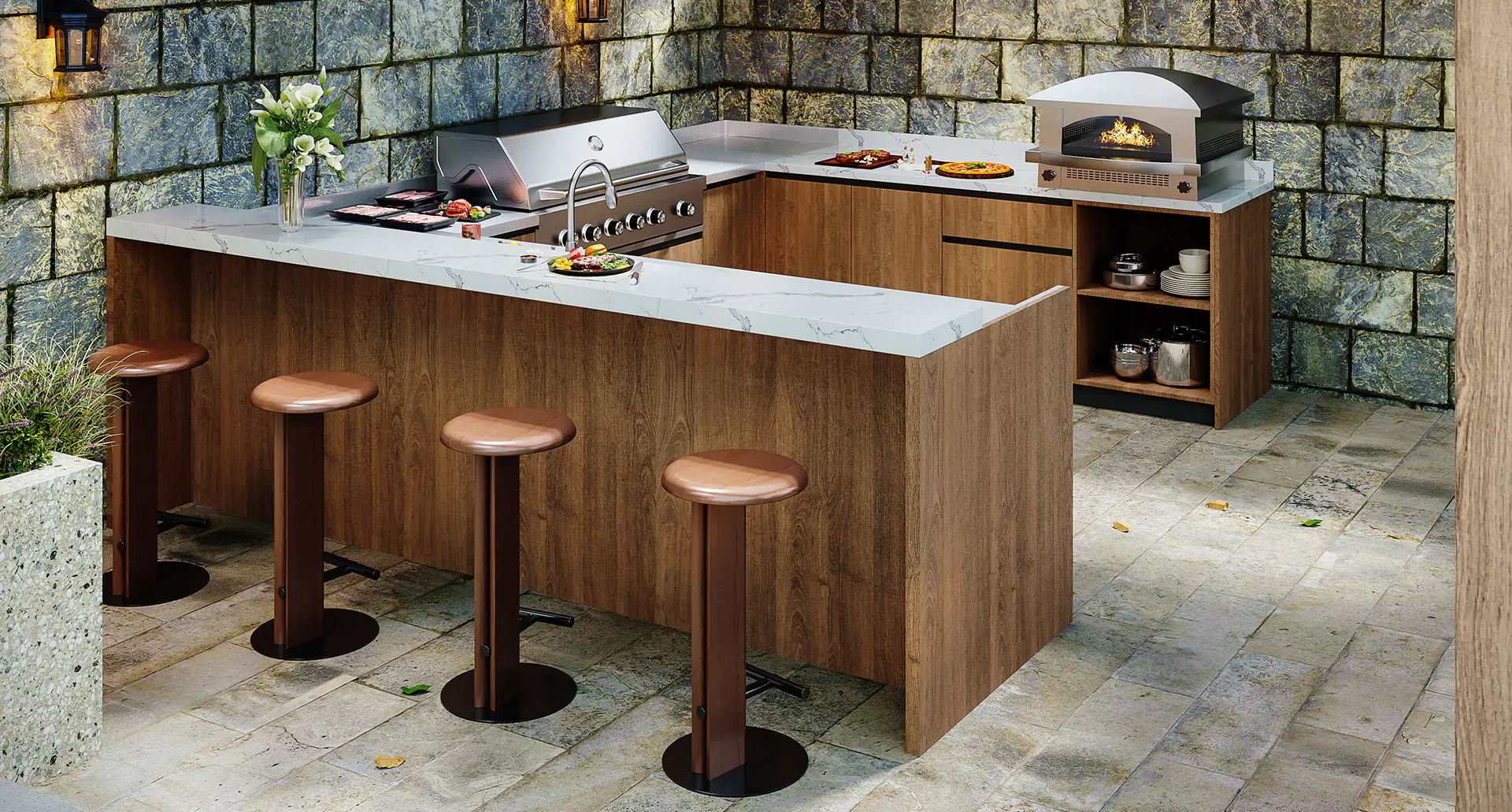
An L-shaped layout separates the grilling station from a dedicated prep and serving area, allowing multiple people to work in the space without crowding around the grill. This configuration also creates a natural corner for seating or a small dining counter.
The Island Layout
A freestanding island with cabinet storage on multiple sides works best for larger backyards and allows guests to gather around the cook rather than watching from behind. This layout benefits most from modular cabinet units that can be arranged and reconfigured as needs change.
Storage Ideas Worth Considering
Storage configuration is one of the most customizable aspects of outdoor kitchen cabinets, and choosing the right mix of drawers, doors, and specialty compartments has a direct impact on daily convenience.
- Deep pull-out drawers work well for pots, utensils, and grilling tools, keeping them accessible without digging through a cabinet.
- Dedicated propane tank cabinets with ventilation keep fuel sources safely enclosed and out of view.
- Trash and recycling pull-outs integrated into the cabinet run reduce clutter on the countertop.
- Sealed dry storage cabinets protect paper goods, condiments, and grilling supplies from moisture and pests.
Design Details That Elevate the Finished Look
Beyond material and layout, several finishing details separate a basic outdoor cooking setup from a polished outdoor kitchen space.
- Matching cabinet hardware and countertop edge profiles create a cohesive, intentional appearance rather than a mismatched collection of parts.
- A brushed or textured stainless finish hides fingerprints and minor scratches better than a mirror-polished surface.
- Integrated lighting under upper cabinets or along countertop edges extends usability into evening hours.
These smaller design choices often matter as much to overall satisfaction as the initial layout decision, since they affect how the space feels and functions during actual daily use rather than just how it looks in a photo.
Alternative Uses for Outdoor Kitchen Cabinets Beyond Cooking
A well-built stainless steel outdoor kitchen cabinet system is not limited to grilling and serving. Because the material resists UV exposure, moisture, and temperature extremes, the same cabinets adapt well to other outdoor storage needs.
Overflow Workshop or Garage Storage
Positioned under a carport or along an exterior wall, outdoor kitchen cabinets can double as a weatherproof tool storage station, with the countertop serving as a workbench surface resistant to solvents and impacts.
Garden and Potting Stations
The countertop, deep drawers, and shelved compartments found in standard outdoor kitchen cabinets map naturally onto the needs of a gardening setup, storing soil, tools, and seed trays while keeping everything organized and dry.
Bringing These Outdoor Kitchen Cabinets Ideas Together
In summary, the most successful outdoor kitchen cabinets ideas start with a corrosion-resistant material like grade 304 stainless steel, then build outward with a layout suited to the available space and a storage configuration matched to actual cooking and entertaining habits. Getting these fundamentals right up front prevents the early repairs and refinishing work that often plague less durable outdoor kitchen builds.
When comparing manufacturers of outdoor kitchen cabinets, checking sheet metal thickness, weld quality, and finish type provides a more reliable basis for comparison than photos alone, since these details determine how well the cabinets will actually perform through years of sun, rain, and temperature swings.
For more information about our products, solutions, or cooperation opportunities, please feel free to contact us./optional/
Copyright © 2025 Ningbo AFA Kitchen and Bath Co.,Ltd. All Rights Reserved. Custom Modular Outdoor Kitchen Manufacturer Outdoor Barbecue (BBQ) Kitchen Factory Privacy Policy
