 English
 Español
 Deutsch
 Português
 italiano
 Français
 عربى
عربى
Search
News categories
Recommend News
News categories
Recommend News
 Jun 19, 2026 - By admin
Can a Regular Built-In BBQ Grill Be Installed?
Jun 19, 2026 - By admin
Can a Regular Built-In BBQ Grill Be Installed?
Content
- 1 The Direct Answer: Yes — With the Right Preparation
- 2 Built-In vs. Freestanding BBQ Grill: Understanding the Difference
- 3 Cutout Dimensions and Cabinet Sizing
- 4 Enclosure Material and Heat Clearance Requirements
- 5 Gas Connection: What the Installation Requires
- 6 Ventilation Inside the Grill Cabinet Enclosure
- 7 Step-by-Step Installation Overview
- 8 Frequently Asked Questions
The Direct Answer: Yes — With the Right Preparation
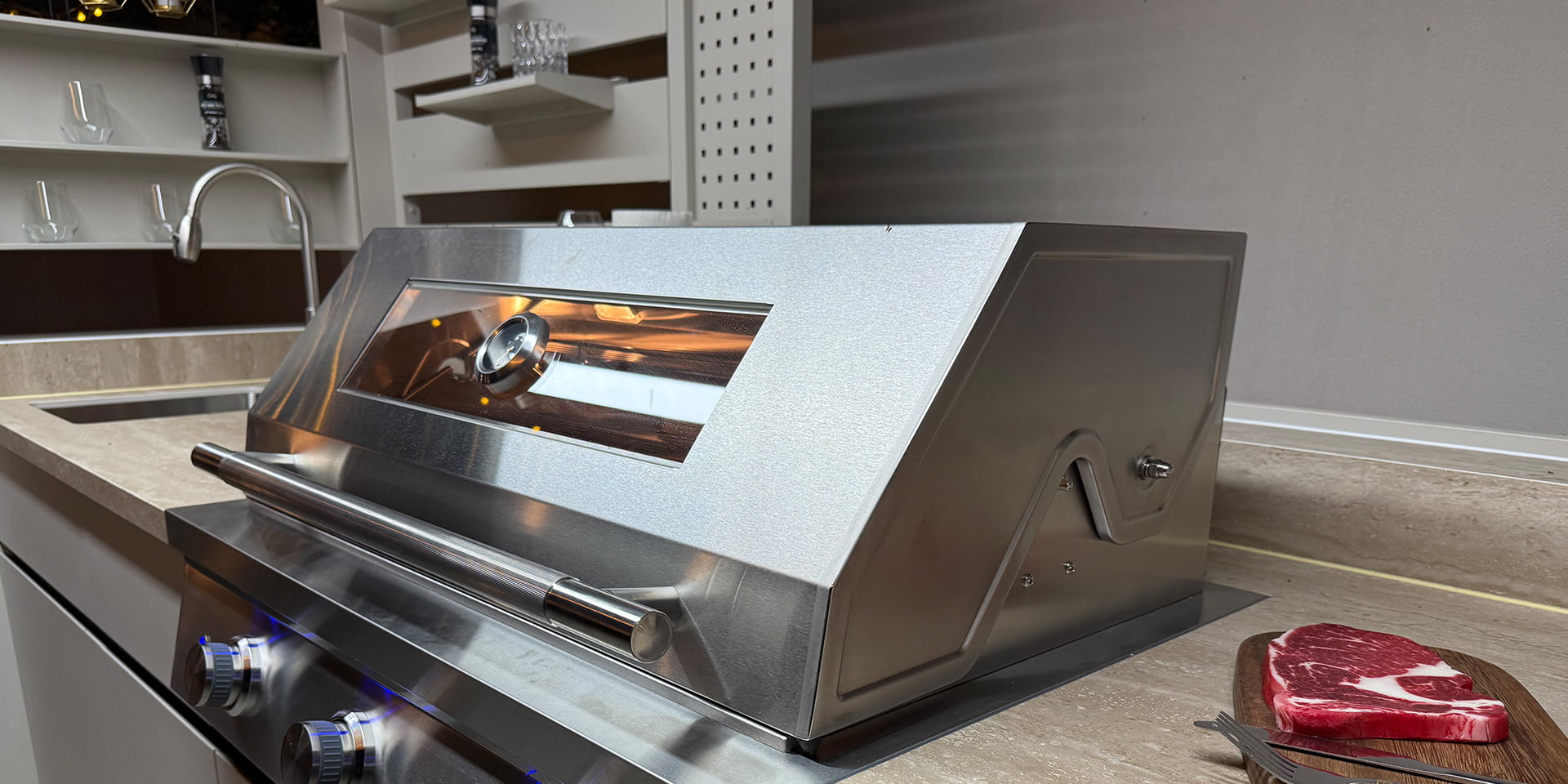
A regular built-in BBQ grill can absolutely be installed into an outdoor kitchen structure, but the process requires more planning than simply dropping a grill into a countertop opening. A successful built-in BBQ grill installation depends on three essentials: a correctly sized cutout in the surrounding cabinetry, compliant gas or electrical connections, and adequate ventilation within the enclosure. Get these right, and a built-in BBQ grill will function safely and reliably for years. Overlook any one of them, and you risk a grill that underperforms, a structure that deteriorates prematurely, or a setup that fails a safety inspection.
This guide walks through every stage of the installation process — from choosing the right built-in grill to the final safety check before the first cook.
Built-In vs. Freestanding BBQ Grill: Understanding the Difference
Not every outdoor BBQ grill is designed for built-in installation. Before purchasing, it is essential to confirm that the model you select is specifically rated as a drop-in or built-in BBQ grill — not a freestanding unit repurposed for an enclosure.
- Built-in BBQ grills have a flange or trim ring around the perimeter designed to rest on the surrounding countertop surface. Their sides and rear are unfinished and engineered to sit within a cabinet cutout with defined clearance gaps on all sides.
- Freestanding BBQ grills are designed with finished exterior panels on all sides, legs or a cart for support, and no flange for countertop mounting. Installing one in an enclosure traps heat, restricts airflow, and creates a fire hazard.
Always verify the product specifications before purchase. A genuine built-in BBQ grill will include installation cutout dimensions and minimum side-clearance requirements in the documentation.
Cutout Dimensions and Cabinet Sizing
The cabinet opening must match the grill's specified cutout dimensions precisely. Most built-in BBQ grills require a cutout that is 10 mm to 20 mm larger than the grill body on each side to allow for thermal expansion and installation clearance. Building the cutout too tight prevents the grill from fitting; too large and the flange will not cover the gap adequately.
Standard built-in BBQ grill widths range from 600 mm to 1,200 mm, with depths typically between 500 mm and 600 mm. The cabinet structure itself must be deep enough to accommodate the grill body — most built-in grills extend 400 mm to 550 mm below the countertop surface.
| Grill Width | Recommended Cutout Width | Min. Cabinet Depth | Typical Burners |
|---|---|---|---|
| 600 mm | 620 – 630 mm | 560 mm | 2 – 3 |
| 760 mm | 780 – 790 mm | 560 mm | 3 – 4 |
| 910 mm | 930 – 940 mm | 580 mm | 4 – 5 |
| 1,200 mm | 1,220 – 1,230 mm | 600 mm | 5 – 6 |
Always refer to the specific installation manual for your chosen BBQ grill model — the dimensions above are general guidance, and individual products may vary.
Enclosure Material and Heat Clearance Requirements
The material surrounding a built-in BBQ grill must be non-combustible. Stainless steel outdoor kitchen cabinetry is the preferred choice for this reason — it withstands radiant heat from the grill body, does not warp, and eliminates the fire risk associated with timber or composite framing. Masonry (concrete block, brick, or stone veneer over a steel frame) is also acceptable for permanent structures.
Side and Rear Clearance
Most built-in BBQ grill manufacturers specify a minimum clearance of 25 mm to 50 mm between the grill body and the cabinet side walls. This gap allows heat to dissipate away from the enclosure and prevents the cabinet panels from reaching temperatures that could cause structural damage or compromise adjacent components such as refrigerators or gas cylinder compartments.
Overhead Clearance
Regardless of whether the outdoor kitchen is open-air or covered, maintain a minimum of 900 mm of vertical clearance from the top of the grill hood to any overhead structure — pergola beams, patio covers, or retractable awnings. This is not merely a manufacturer recommendation; it is a safety requirement in most building codes covering outdoor gas appliances.
Gas Connection: What the Installation Requires
The gas connection is the most safety-critical element of any built-in BBQ grill installation. This work must be carried out by a licensed gas fitter in virtually every jurisdiction — it is not a DIY task regardless of the installer's general competence.
- Confirm the fuel type — natural gas (NG) and liquefied petroleum gas (LPG/propane) require different orifice sizes in the burner manifold. Most built-in grills are available in both versions, but the two are not interchangeable without a conversion kit.
- The gas supply line must be sized to deliver the grill's maximum flow rate without pressure drop. A licensed gas fitter will calculate the pipe diameter and run length required based on the grill's BTU rating.
- A manual shutoff valve must be installed within easy reach of the grill — typically inside an adjacent cabinet — so the gas supply can be isolated quickly in an emergency.
- All connections must be leak-tested with soapy water or an approved gas detector after installation and before the first use.
- If the built-in BBQ grill is supplied from an LPG cylinder stored in the base cabinet, the cabinet compartment must be ventilated at the base with an open vent to atmosphere to prevent gas accumulation.
Ventilation Inside the Grill Cabinet Enclosure
The cabinet compartment directly below and adjacent to a built-in BBQ grill must be ventilated — both for heat management and gas safety. Trapped heat accelerates corrosion of the grill undercarriage and can damage the gas components inside the enclosure. A gas leak in an unventilated cabinet creates an explosive concentration risk.
- Install louvred door panels or dedicated vent cutouts in the cabinet door beneath the grill. Open vents at the base allow heavier-than-air LPG to escape to atmosphere rather than accumulate.
- For natural gas installations, upper vents are also recommended since NG is lighter than air and accumulates at the top of an enclosure.
- AFA Kitchen and Bath — with over three decades of outdoor kitchen manufacturing experience across 45,000 square meters of production facilities — integrates purpose-designed ventilation into every outdoor kitchen cabinet product, ensuring compliance with safety standards across the US, Europe, and Australia as a standard feature of the system.
Step-by-Step Installation Overview
- Plan utility routes first. Mark the positions of gas supply, drainage, water, and electrical conduits before the cabinet structure is built or positioned. Retrofitting utility connections after cabinets are in place is significantly more expensive and disruptive.
- Build or position the cabinet enclosure. Confirm the cutout dimensions match the built-in BBQ grill's installation template. Use the manufacturer-supplied template if provided.
- Install the gas line to the shutoff valve location. Have a licensed gas fitter run and pressure-test the supply line before the grill is placed.
- Lower the grill into the cutout. The flange should rest evenly on the countertop surface on all four sides. Use the supplied mounting clips or brackets to secure the grill to the underside of the countertop if specified by the manufacturer.
- Connect the gas supply. Have the licensed gas fitter make the final connection from the supply line to the grill inlet and conduct a full leak test.
- Test all burners and ignition systems before considering the installation complete. Confirm flame color and pattern on each burner — a steady blue flame indicates correct gas pressure and air mixture.
Frequently Asked Questions
Q1: Can I install a built-in BBQ grill myself without a contractor?
The physical placement of the grill into the cabinet cutout is within the ability of a competent DIY installer. However, the gas connection must be made by a licensed gas fitter in most jurisdictions — this is a legal requirement, not merely a recommendation. Working without a license on a gas appliance can void the manufacturer warranty, invalidate home insurance, and create serious safety risks. The remainder of the installation — cabinetry, countertop, and utility routing — can typically be handled without a licensed tradesperson.
Q2: Does a built-in BBQ grill need a permit?
In most US states and many other jurisdictions, a permanent outdoor kitchen installation that includes gas connections requires a building permit. Requirements vary significantly by municipality. As a practical rule, if the installation involves a fixed gas line, plumbing, or electrical connection, check with your local building authority before beginning work. Installing without a required permit can complicate property sales and may require costly removal or remediation.
Q3: What countertop material is best for a built-in BBQ grill surround?
Granite, porcelain tile, concrete, and stainless steel are all suitable non-combustible countertop materials for built-in BBQ grill surrounds. Stainless steel is particularly practical — it is heat-resistant, easy to clean, and visually consistent with the grill itself. Avoid composite stone (engineered quartz) directly adjacent to the grill opening, as sustained heat exposure can cause discoloration or delamination in some products.
Q4: How do I maintain a built-in BBQ grill after installation?
Brush grill grates clean while still warm after every use. Clean burner tubes and check for blockages every three to six months — spider webs and debris inside burner tubes are a common cause of uneven flames. Inspect the gas hose and fittings annually for cracking or corrosion, and have the connections re-tested by a gas fitter if any deterioration is visible. Wipe exterior stainless steel surfaces with a damp cloth in the grain direction monthly, and apply a stainless conditioner every six months to maintain the finish.
For more information about our products, solutions, or cooperation opportunities, please feel free to contact us./optional/
Copyright © 2025 Ningbo AFA Kitchen and Bath Co.,Ltd. All Rights Reserved. Custom Modular Outdoor Kitchen Manufacturer Outdoor Barbecue (BBQ) Kitchen Factory Privacy Policy
